
AUCKLAND, 21 July 2026
Online shoppers across New Zealand are being warned to look beyond Kiwi branding, local-sounding business names and familiar imagery before placing an order.
Consumer New Zealand says it is receiving more reports about online stores that appear to be based in New Zealand but are actually operated from overseas. These websites may use New Zealand place names, local language and family-focused marketing to create the impression that customers are buying from a domestic retailer.
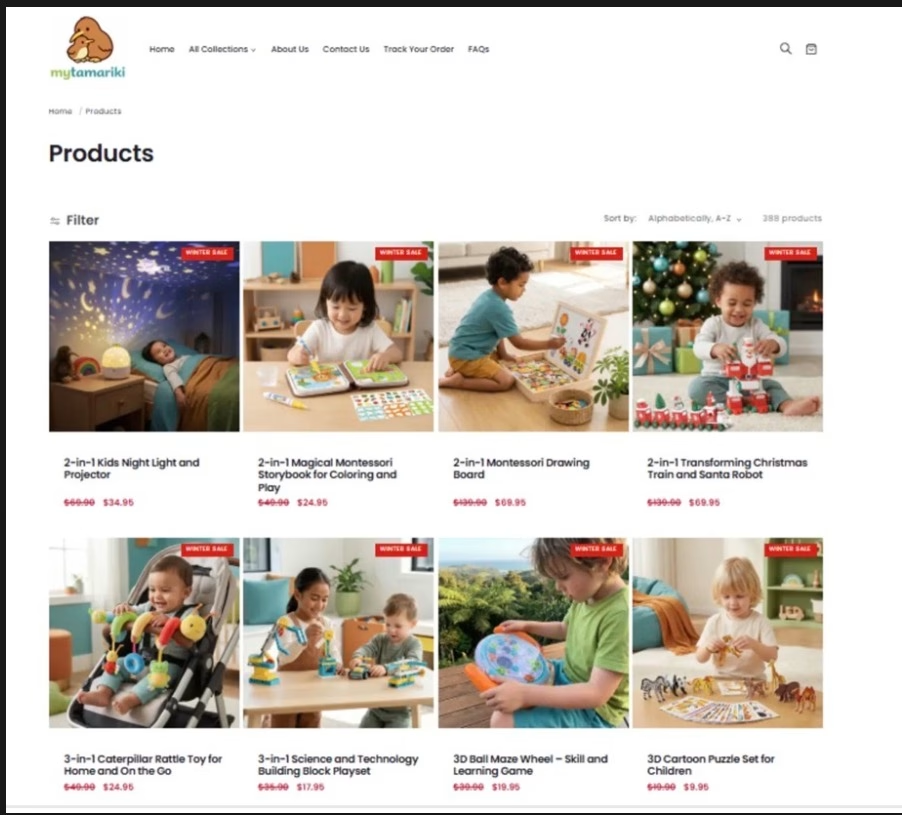
The warning follows concerns raised about the website Mytamariki, which promotes products intended to “support everyday family life in New Zealand”. However, according to reporting by RNZ, the business address and website details list a location in Hong Kong.
Online reviews posted on Facebook and Trustpilot have also alleged that some products advertised on the website can be found on international marketplaces such as AliExpress.
Mytamariki was contacted for comment by RNZ.
Local appearance does not guarantee a local business
Consumer New Zealand chief executive Jon Duffy told RNZ’s Morning Report that websites presenting themselves as New Zealand businesses while operating offshore are becoming increasingly common.
The problem is not limited to standalone websites. Similar sellers can reach New Zealand customers through Facebook Marketplace, Shopify-powered stores and social media advertisements.
For shoppers, the difficulty is that many of these websites look professional.
They may display New Zealand flags, native plants, Māori-inspired names, references to Kiwi families or photographs of familiar landscapes. Prices may be shown in New Zealand dollars, while shipping pages may refer to local customers.
None of those features proves that the business is physically based in New Zealand.
That distinction matters because consumers often expect faster delivery, easier refunds and stronger legal protection when dealing with a local retailer.
Why Auckland shoppers should be cautious
Auckland residents are particularly exposed to aggressive online advertising because of the city’s large, digitally connected population and diverse consumer market.
Advertisements for clothing, children’s products, household goods and gifts frequently appear on Facebook, Instagram and Google. Many are designed to look like small Auckland or New Zealand businesses.
A shopper may believe they are supporting a local family-run company, only to discover later that the order is being processed and shipped from overseas.
This can create several problems:
- Delivery may take much longer than expected.
- The item may not match the photographs or description.
- Returns may have to be sent overseas at the customer’s expense.
- Customer service may be difficult to contact.
- Refund rights may be hard to enforce.
- The product may not meet New Zealand safety expectations.
The issue is not that every overseas retailer is dishonest. Many international businesses operate transparently and deliver legitimate products.
The concern arises when a seller creates a misleading impression that it is based in New Zealand or that its products are locally designed or manufactured.
How shoppers can check whether a store is genuinely local
Consumer New Zealand recommends carrying out a few basic checks before buying from an unfamiliar website.
Check the physical address
Search the business address using Google Maps.
A website may claim to operate from Auckland, Hamilton, Queenstown or another New Zealand location. Shoppers should check whether the address is a genuine shop, office, warehouse, private home or unrelated building.
A local address listed on a website does not automatically prove the business is operating from that location.
Examine the website domain
A “.co.nz” or “.nz” domain can provide useful information, but it should still be checked.
The Domain Name Commission, part of InternetNZ, oversees New Zealand domain names. Consumers can use its lookup service to examine registration information connected to a domain.
Duffy told RNZ that a website appearing to use a New Zealand domain without being properly registered would be a major warning sign.
Read independent reviews
Do not rely only on testimonials published on the company’s own website.
Search the business name with words such as:
- review
- scam
- refund
- delivery
- complaint
- Trustpilot
One negative review does not prove a business is fraudulent. However, repeated complaints about missing orders, poor-quality products or unanswered refund requests should not be ignored.
Check the returns policy
Read the refund and return terms before paying.
Look for a physical return address, clear timeframes and information about who pays for return shipping. Some websites appear local until the returns page reveals that products must be posted to another country.
Compare the product elsewhere
Use a reverse image search or search the product description.
Products presented as exclusive or locally designed may also appear on AliExpress, Temu or other international marketplaces at much lower prices.
This does not automatically mean the website is fraudulent, but it may indicate dropshipping or misleading claims about product origin.
Misleading retailer or outright scam?
Duffy said there is an important difference between a retailer that misrepresents its location or products and a website created purely to steal money.
In an outright scam, the seller may accept payment without ever intending to supply the goods.
In other cases, the customer receives an item, but it may be far cheaper, lower quality or substantially different from what was advertised.
The second situation can be especially frustrating because the seller can argue that the order was technically fulfilled, while the consumer is left trying to obtain a refund from an offshore operator.
Why enforcement is difficult
New Zealand law prohibits businesses from misleading consumers. However, enforcement becomes complicated when the operator, website infrastructure and payment systems are based overseas.
Consumers can report misleading advertisements or stores to platforms such as Facebook or Shopify. The Commerce Commission may also receive complaints about potential breaches affecting New Zealand shoppers.
However, local regulators can face serious limitations when the business has no genuine presence or assets in New Zealand.
This means prevention is often more effective than attempting to recover money after a problem occurs.
What to do when an order goes wrong
Customers who believe they have been misled should keep screenshots of the website, product description, advertising claims, receipts and communication with the seller.
They should first request a refund in writing.
Where the seller does not respond, the customer may contact their bank or card provider to ask whether a chargeback is available. Payment services such as PayPal may also offer dispute procedures, depending on how the purchase was made.
Suspected scams can be reported to Netsafe, while potentially misleading trading conduct can be reported to the Commerce Commission.
The Webfit News takeaway
The “buy local” message remains important, but Kiwi branding alone is not proof of a Kiwi business.
Before purchasing from an unfamiliar website, spend two minutes checking the address, domain registration, return policy and independent reviews.
A polished website can be created quickly. Recovering money from an overseas seller can take considerably longer, assuming it is possible at all.
Source acknowledgement: This article is based on original reporting by RNZ News and Morning Report, including comments from Consumer New Zealand chief executive Jon Duffy. Webfit News has independently restructured the report and added consumer guidance, Auckland context and practical checks for New Zealand shoppers.
References
- RNZ News, “Fake ‘New Zealand-based’ sites fool online shoppers”, 21 July 2026
- Consumer New Zealand
- Domain Name Commission NZ
- New Zealand Commerce Commission
- Netsafe New Zealand